
Pre-Lab Task ⚡ Ohm's Law (Junior Science)
8 chars (must include 0-9, A-Z, a-z)
2 chars (1st digit 0-9, 2nd letter a-z)
Up to 6 digits (0-9 numbers only)
Up to 50 chars (Uppercase only)
1 Objective
To find out how the potential difference across a conductor is related to the current flowing through it.
2 Apparatus
- 1 eureka wire (0.5 m long)
- 1 voltmeter
- 1 ammeter
- 1 battery box
- 1 rheostat
- 1 switch
- Several connecting leads
3 Procedure & Circuit Diagram
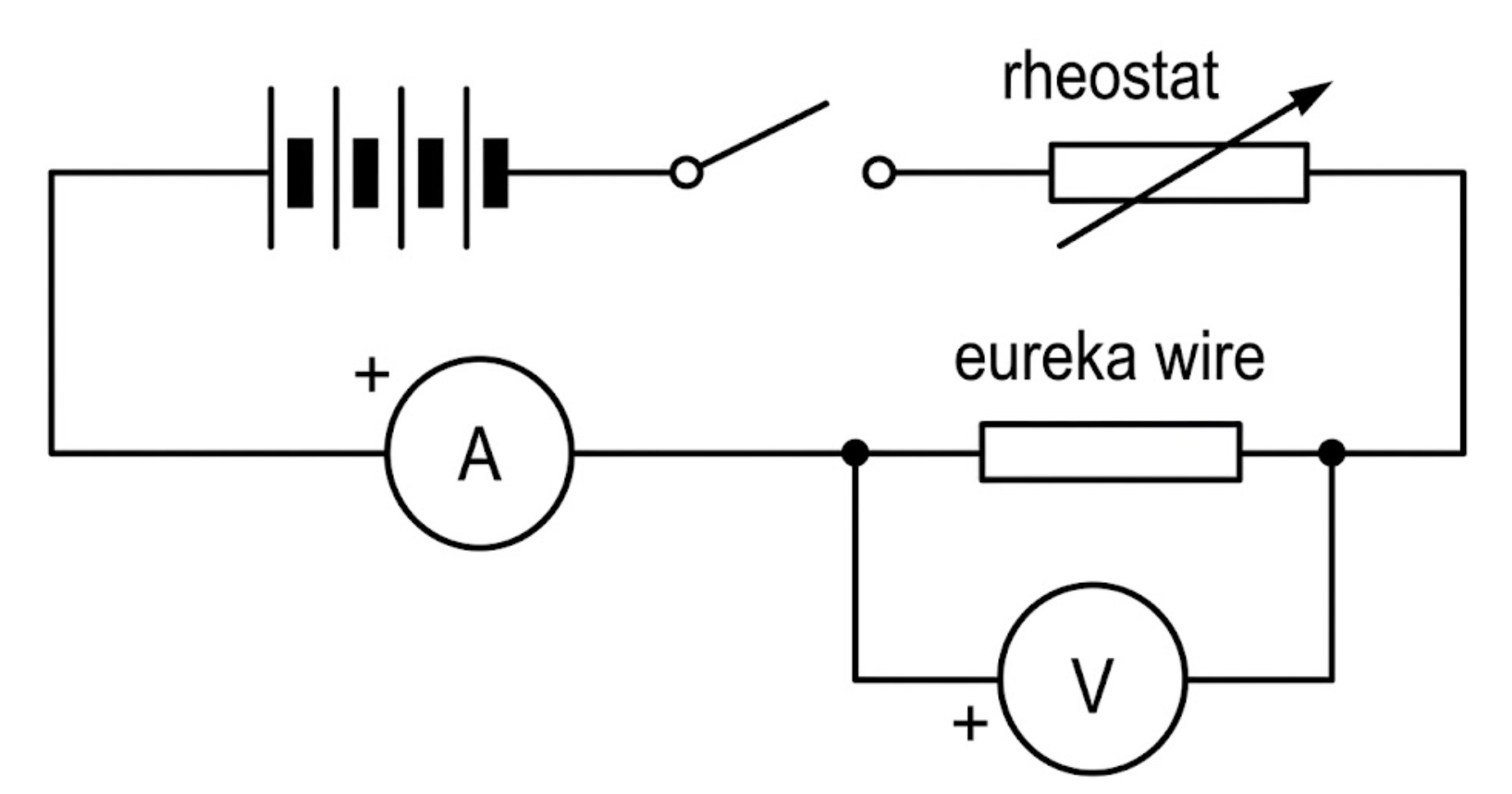
Select the correct action verb for each step in order:
- 1. the circuit components in series with the battery box, switch, rheostat, ammeter, and eureka wire.
- 2. the voltmeter in parallel across the eureka wire.
- 3. the switch to make the circuit complete.
- 4. the current passing through the wire by adjusting the rheostat and take the readings.
- 5. the current from the ammeter and the voltage from the voltmeter for each setting of the rheostat.
Note: The red terminals (marked positive) of the ammeter and voltmeter should be connected to the side of the circuit that leads to the positive pole of the battery. The meters may be damaged if they are connected in the wrong way.
4 Simulation


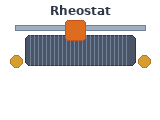
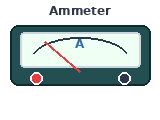
0.00 A

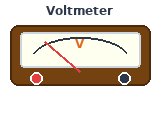
0.00 V
5 Result and Analysis
1. Tabulate the ammeter and voltmeter readings in the table below.
| Trial Number | 1 | 2 | 3 | 4 | 5 |
|---|---|---|---|---|---|
| Rheostat resistance (Ω) | - | - | - | - | - |
| P.d. V across wire (V) | - | - | - | - | - |
| Current I through wire (A) | - | - | - | - | - |
| V / I (V A⁻¹) | - | - | - | - | - |
2. Plot a graph of V against I.
6 Discussion & Conclusion
1. What is the shape of the graph of potential difference against current for the eureka wire?
2. Since the graph is a straight line through the origin, does the resistance of the wire change as current increases?
3. Based on the graph, the potential difference across the eureka wire ____ the current passing through it.
4. Which mathematical equation correctly represents the relationship shown in the graph?